How Games are Getting Funded in 2026

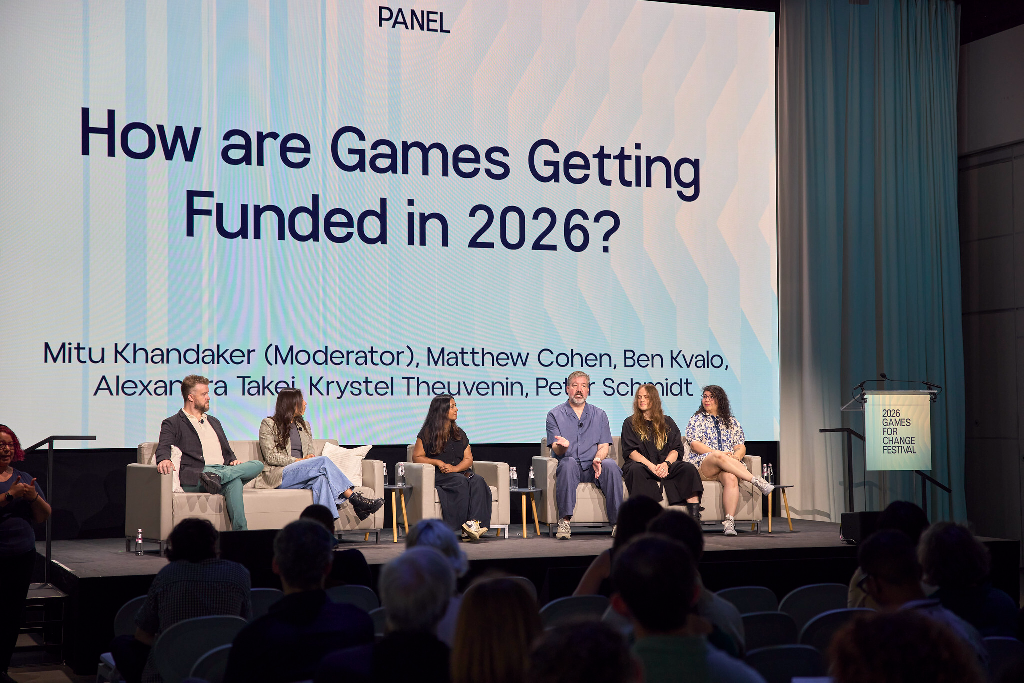
At Games for Change 2026 in New York, NYC Game Design Future Lab director Mitu Khandaker moderated a panel on the current state of game funding. The panelists were Ben Kvalo, founder and CEO of Midwest Games; Matthew Cohen, a games agent at CAA; and two founders from the lab's first cohort, Peter Larson Schmidt of CYBRLICH Studios; Krystel Theuvenin, a worker-owner of the cooperative studio Munity, which is building an arcade game; and of course our own Alexandra Takei, who leads platform revenue and gaming partnerships here at Medal and previously worked as a VC and studio founder.
The traditional publishing model has fragmented
Until roughly 2016, developers typically funded games by signing with a single publisher who covered development and handled the roughly 40 disciplines involved in bringing a game to market. When venture capital entered the space around that time, publishers began pulling back from early-stage risk. Today most publishers focus on late-stage deals, and early development is funded through bootstrapping, grants, project financing, or friends and family.
Kvalo described the current ecosystem as modular, with more project-based work and more parties involved in each deal, similar to how the film industry is structured. His company now handles publishing operations on behalf of other publishers. Cohen noted that a modern deal usually combines several sources: bootstrap funding and early outside capital first, then a publisher or financial vehicle added later. He also noted this is cyclical, and the current period is a difficult one for both funding and discoverability.
Venture capital has largely exited game content
Takei explained that VCs tested game content investment for roughly eight years and concluded it rarely produces the returns their fund models require. A game that sells five million units is not sufficient at venture scale. The companies that do reach that scale, such as Riot or the major consolidated publishers, typically win through distribution advantages like free-to-play or mobile rather than game quality alone.
The lasting effect of the VC period is a changed expectation. Developers are now expected to plan and raise for the entire lifecycle of the product, including go-to-market, marketing budget, and channel strategy. Publishers now ask for a go-to-market plan as a standard part of evaluating a deal, which was uncommon a few years ago.
What funders look for
Kvalo said he looks for traction, particularly evidence of player retention over time, whether from public data or private user testing. He advised treating a studio like a startup with staged funding rather than expecting to unlock everything at once, and noted that most developers need several released games before one succeeds.
Cohen said the qualitative bar is being able to state clearly who the game is for and why that audience will buy it at launch. Takei added that funders also expect a distribution plan, since being fun and distinctive is common among the roughly 18,000 games on Steam. Options he listed include influencer partnerships, campaigns built on many small creators, designing the game to produce shareable clips, or targeting a specific underserved audience.
On wishlists, the panel's view was that they are an imperfect intermediary metric that does not reliably predict sales, but they remain the main pre-launch signal available and factor into Steam's discoverability algorithm. Conversion quality matters more than volume. Kvalo cited Midwest Games' release Tomb Water, a 2D soulslike Western from a two-person studio, which ranked 12th in wishlists among 70 games launching the same day but reached the New & Trending section because its narrowly targeted audience converted at a high rate.
Lessons from the cohort founders
Larson Schmidt compared fundraising to dating: researching each potential partner's interests, evaluating cultural fit alongside genre and check size, and eventually asking directly whether they are writing checks and at what size. He said his main regret was not asking that question earlier.
Theuvenin's studio, Munity, is a worker cooperative selling arcade machines, a structure most funders are unfamiliar with. She found that investment in a cooperative is workable once the terminology is adjusted, and that framing the pitch around impact investing and film-style financing produced more interest. Because the product is a physical machine, the team also builds relationships with venue owners rather than only funders.
Opportunities for New York studios
The panel identified New York's advantages as concentrated capital, a growing population of finance professionals who grew up playing games, and proximity to the arts. The main obstacle is that most of this capital does not understand the games industry and will not invest in what it does not understand.
Their recommendations were to build relationships with potential investors before pitching, to frame deals in terms the investor already knows, such as real estate or film finance structures with supporting projections, and to tell a story connected to place. Kvalo noted that 90% of Midwest Games' funding came from Midwest investors because the company's story was tied to the region.
The panel also described emerging financing models: crowdfunding and crowd equity for backers motivated by supporting the work rather than returns, catalog-backed loans similar to music industry licensing deals, and pairings of project financiers with service-based publishers that let developers retain long-term rights.
Closing advice
The panel's advice for developers raising money today: partner with existing communities, IP, or audiences that will show up at launch. Treat relationships as a long-term asset, since deals in this industry come through people you have built trust with over time. If business isn't your strength, find someone to help and learn it anyway, because funders now expect founders to run their studio as a business. Know your strengths and lead with them in every pitch. Ask potential funders about their check size early so neither side wastes time. And be certain you love the work, because the current environment is hard enough that craft excellence and commitment are prerequisites.
Watch the full panel: How are Games Getting Funded in 2026? | G4C2026